
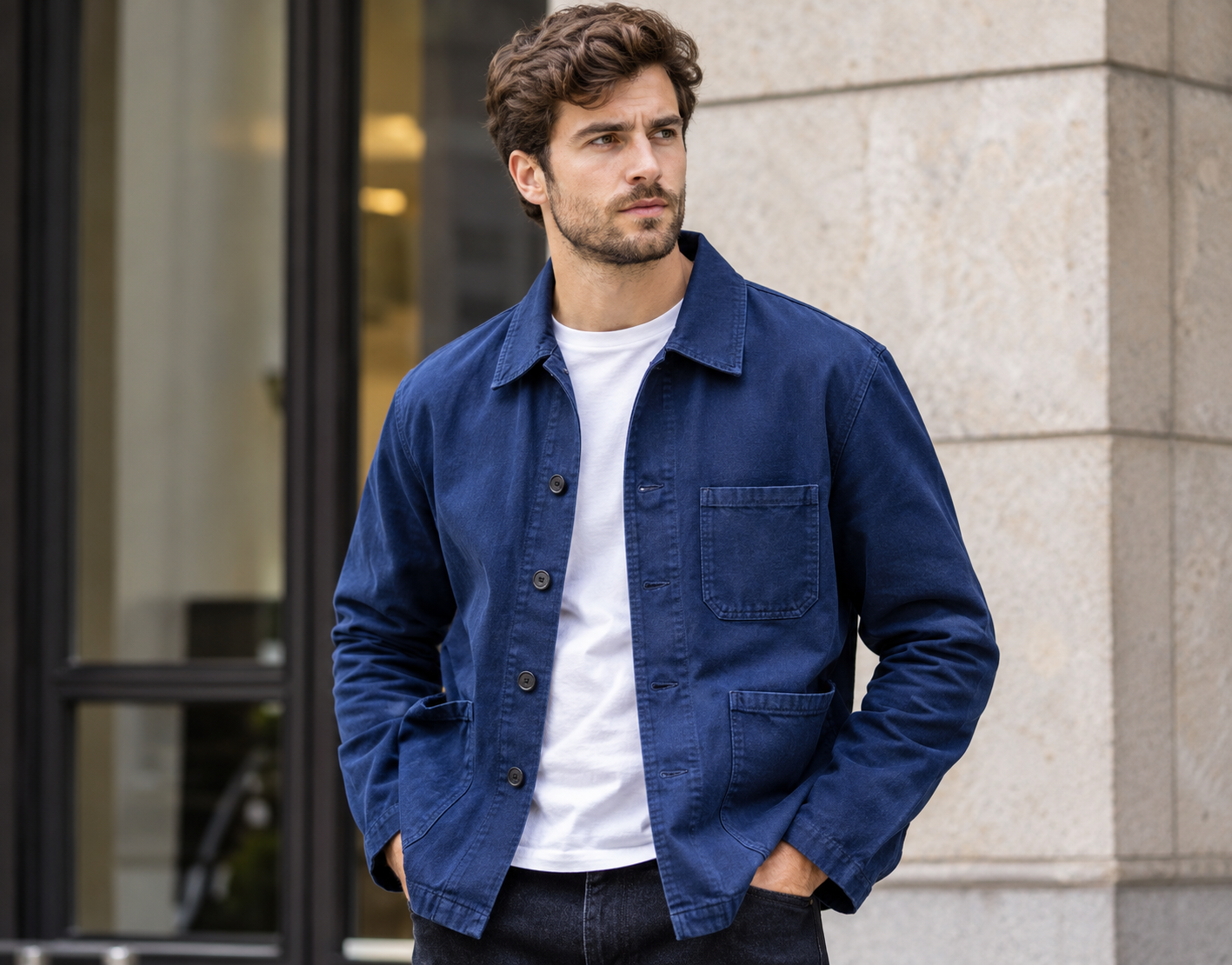
Chore Jacket: Why This Workwear Classic Still Deserves a Place in Your Wardrobe
Some jackets become popular because of a particular fashion trend. Others earn their place in men’s wardrobes through years of practical use. The chore jacket belongs firmly in the second category. Originally designed for people who needed dependable clothing for demanding physical work, it has gradually become one of the most recognisable pieces of casual menswear.
What makes it interesting is how little its basic design needs to change. A simple collar, button-front fastening, roomy patch pockets and a comfortable shape are still enough to make it useful today. It works with jeans and boots, but it can also bring a relaxed feel to smarter outfits.
The modern chore jacket is available in everything from traditional cotton twill and moleskin to denim, canvas and lighter seasonal fabrics. Although its appearance has evolved, the original idea remains the same: practical clothing that is comfortable, durable and easy to wear.
Whether you are considering your first workwear jacket or looking for a more versatile alternative to a denim jacket, understanding the chore jacket’s history, construction and styling possibilities will help you appreciate why it has lasted so long.
What Is a Chore Jacket?

A chore jacket is a practical, usually lightweight-to-medium-weight outerwear piece originally made for manual workers. Its traditional design features a straight or slightly relaxed cut, a pointed collar, front buttons and several large patch pockets.
Unlike tailored jackets, which are designed to create a structured silhouette, chore jackets prioritise comfort and freedom of movement. Their roomy shape also makes them suitable for layering over shirts, sweatshirts and lightweight knitwear.
Most traditional designs include three or four front pockets. These were originally intended to hold small tools, work materials and everyday essentials. Modern versions retain these details, although the pockets are now more likely to carry a phone, wallet or keys.
The name comes from the everyday jobs and household tasks associated with the garment. It is also commonly called a chore coat or work jacket.
Although designs vary between brands, the most recognisable features include:
- Patch pockets: Large external pockets that give the jacket its practical appearance.
- Button-front closure: A straightforward fastening that is easy to use.
- Pointed collar: A simple collar that works with both casual and layered outfits.
- Durable fabric: Common choices include cotton twill, canvas, denim and moleskin.
- Relaxed fit: Enough room to move comfortably and wear additional layers underneath.
These details give the chore jacket its identity without making it look overly complicated.
The History Behind the Chore Jacket
The chore jacket has its roots in 19th-century France, where practical workwear was an important part of everyday clothing. Farmers, railway workers, mechanics and other labourers needed garments that could withstand regular use without restricting movement.
The traditional French version became known as the bleu de travail, which translates to working blue. Its distinctive blue colour became closely associated with French working clothes.
Cotton fabrics such as twill and moleskin were popular because they offered a useful combination of strength and comfort. The roomy construction allowed workers to move freely, while the large pockets provided convenient storage for small tools and other items.

One particularly notable name in this history is Le Mont Saint Michel. The company traces its work jacket back to 1913, when it was developed for agricultural workers and artisans in Brittany and Normandy.
As industrial workwear became more established, similar designs appeared in other countries. American workwear manufacturers also produced practical jackets for labourers, helping establish the chore coat as a recognisable category of clothing.
Over time, the jacket moved beyond its original purpose. Vintage clothing enthusiasts, designers and menswear labels began appreciating its straightforward construction and distinctive appearance.
Its journey from French workshops to contemporary wardrobes is part of what makes it such an interesting garment. It has a genuine working history rather than a design created purely to look rugged.
The modern fashion industry has also given the chore jacket a wider audience. Established publications such as The Guardian and MR PORTER have explored its enduring appeal, particularly the way traditional workwear has influenced contemporary menswear.
What Makes a Good Chore Jacket? Fabric and Construction
The fabric makes a noticeable difference to how a chore jacket looks, feels and performs. Two jackets can have almost identical designs but offer completely different experiences because of their material.
Here are the main fabrics worth understanding before choosing one.
1. Cotton Twill
Cotton twill is one of the most practical choices for everyday wear. Its diagonal weave gives it a recognisable texture and makes it suitable for regular use.
It generally feels more structured than lightweight cotton shirts but is comfortable enough for everyday layering. A cotton twill chore jacket works particularly well during spring and autumn.
2. Cotton Canvas
Canvas is known for its firm construction and durable feel. It is often used in workwear-inspired clothing because it can handle regular wear.
A canvas chore jacket usually has a more rugged appearance than a softer cotton version. It pairs naturally with denim, work boots and heavyweight T-shirts.
However, heavier canvas can feel stiff when new, so the fabric weight is worth considering if comfort is a priority.
3. Moleskin
Moleskin is a densely woven cotton fabric with a soft, brushed surface. Despite its name, traditional cotton moleskin is not made from animal skin.
It has a slightly more refined appearance than canvas while retaining the substantial feel associated with traditional workwear.
French heritage labels have helped preserve the connection between moleskin and classic work jackets. Le Mont Saint Michel, for example, continues to feature cotton moleskin in its workwear collection.
4. Denim
Denim chore jackets combine two familiar workwear styles. They retain the practical shape and pockets of a traditional chore coat while introducing the texture and character of denim.
Indigo is the most recognisable option, although washed blue, black and natural denim versions are also available.
They are particularly easy to wear with simple T-shirts, chinos and casual footwear.
5. Lightweight Cotton and Linen
Not every chore jacket needs to be heavy. Lightweight cotton and linen versions are useful when temperatures rise.
They offer a softer appearance and can be worn over a T-shirt or an open-collar shirt without adding too much warmth.
| Fabric | Appearance | Best suited to |
|---|---|---|
| Cotton twill | Clean and textured | Everyday wear |
| Canvas | Rugged and structured | Casual workwear |
| Moleskin | Soft and substantial | Cooler weather |
| Denim | Casual and heritage-inspired | Relaxed outfits |
| Linen | Light and breathable | Warm weather |
How to Wear a Chore Jacket Without Overthinking It

One of the best things about a chore jacket is that it does not require a complicated outfit. Its simple design works with familiar wardrobe staples, making it easy to introduce into an existing collection.
The key is to pay attention to proportions, colour and the weight of the other clothes you are wearing.
Wear It With a Plain T-Shirt and Jeans
This is probably the easiest starting point.
Choose a navy, olive or beige chore jacket and wear it over a white or grey crew-neck T-shirt. Straight-leg jeans complete the outfit without making it look overly styled.
For footwear, consider leather trainers, suede shoes or simple boots. The result is relaxed but still looks considered.
Try a Chore Jacket With Chinos
If denim feels too casual, chinos offer a useful alternative.
A navy chore jacket looks particularly good with beige, stone or olive chinos. A plain shirt or lightweight knit underneath adds a little more structure.
This combination is suitable for everyday outings, informal lunches and casual workplaces where a traditional suit would feel unnecessary.
Layer It Over a Sweatshirt
When the weather gets cooler, a sweatshirt provides an easy extra layer.
Choose a jacket with enough room through the shoulders and chest to accommodate the additional fabric. A grey sweatshirt, dark jeans and a blue or brown chore jacket create a balanced outfit.
Avoid wearing a particularly heavy sweatshirt underneath a tightly fitted jacket. The extra bulk can make the shoulders and sleeves uncomfortable.
Give Smart Casual Clothing a Relaxed Finish
A chore jacket can also work with smarter casual pieces.
Try wearing a dark navy or charcoal version over an Oxford shirt, with tailored trousers and understated leather shoes.
The contrast between the practical jacket and the cleaner trousers gives the outfit personality without making it feel formal.
It is worth choosing a relatively simple jacket for this combination. Heavy distressing, oversized pockets and excessive detailing can make the outfit look too casual.
Choosing the Right Colour
Colour plays an important role in how often you will wear your jacket. Fortunately, most chore jackets come in shades that are relatively easy to combine with other clothing.
Navy and French blue: These are the classic workwear colours. They look natural with denim, white T-shirts, grey knitwear and beige trousers.
Olive green: A good choice if you prefer earthy colours. Olive works particularly well with brown footwear, cream tops and dark denim.
Beige and ecru: These lighter shades create a clean appearance and are especially useful for spring and summer outfits.
Brown: A brown chore jacket offers a slightly warmer alternative to traditional navy. It pairs well with cream, black, grey and denim.
Black: A black version gives the jacket a more understated, contemporary appearance. It is easy to combine with monochrome outfits and darker trousers.
If you are buying your first one, navy or dark blue is a sensible starting point. It stays close to the garment’s traditional appearance and works with a wide range of everyday clothing.
Chore Jacket vs Denim Jacket: What Is the Difference?
The two styles share some workwear influences, but they have different designs and purposes.
A traditional denim jacket usually has a shorter body, a more fitted shape and a distinctive front design. It is closely associated with Western and American casual clothing.
A chore jacket generally has a straighter silhouette, a longer body and larger external pockets. Its design is more closely connected to practical French and European workwear.
| Feature | Chore jacket | Denim jacket |
|---|---|---|
| Original purpose | Manual work and everyday tasks | Workwear and casual clothing |
| Typical shape | Straight and relaxed | Shorter and more fitted |
| Pockets | Large patch pockets | Often chest pockets and side pockets |
| Common fabrics | Twill, canvas, moleskin | Denim |
| Overall appearance | Utilitarian and understated | Rugged and recognisable |
Neither is automatically better. A denim jacket is a strong option if you prefer a shorter, more familiar casual style. A chore jacket is worth considering if you want more room, practical pockets and a slightly different silhouette.
Finding the Right Fit
Fit is one of the most important things to consider when buying a chore jacket. The traditional design is relaxed, but that does not mean it should look excessively oversized.
A good fit should allow comfortable movement through the shoulders and arms. The body should have enough room for a shirt or lightweight sweater underneath without looking shapeless.
Pay attention to these details:
- Shoulders: The seams should sit naturally around your shoulders, unless you deliberately want an oversized silhouette.
- Chest: There should be enough space to button the jacket comfortably.
- Sleeves: They should reach around your wrist without covering most of your hands.
- Length: A traditional chore jacket generally sits around the hip area, although longer designs are also available.
- Layering: Consider what you intend to wear underneath before choosing your size.
Some heritage-inspired jackets have a deliberately boxy shape. That is part of their character, so choosing a size that is slightly more relaxed than a conventional fitted jacket can make sense.
However, always check the individual brand’s size guide. Chore jackets do not follow one universal sizing standard.
Brands Known for Chore Jackets
Several established clothing labels have helped keep workwear-inspired jackets relevant. Some focus on traditional French designs, while others reinterpret the style through contemporary casual clothing.
Here are a few worth exploring.
- Le Mont Saint Michel: Particularly relevant for traditional French workwear, cotton moleskin and heritage-inspired designs.
- Carhartt WIP: Offers modern interpretations of practical workwear, including its Michigan Coat.
- Universal Works: Known for relaxed silhouettes and clothing influenced by traditional workwear.
- Alex Mill: Offers approachable everyday clothing, including workwear-inspired jackets.
- Le Laboureur: A name worth investigating if you appreciate traditional French work clothing.
You can explore the Le Mont Saint Michel work jacket collection and Carhartt WIP’s clothing range to see how different brands approach the style.
Is a Chore Jacket Worth Buying?
For someone who wants a practical everyday jacket, the chore jacket is a worthwhile option.
Its appeal comes from its straightforward design rather than complicated detailing. It can be worn over a T-shirt in mild weather, layered with knitwear when temperatures drop or combined with smarter casual clothing.
There are a few limitations worth remembering. Heavy canvas and moleskin versions may feel too warm for summer, while some traditional cuts can look boxy on people who prefer fitted outerwear. The large pockets are useful, but they can also add visual bulk when filled.
The best choice depends on your wardrobe and local climate. If you live somewhere with warm weather for much of the year, a lightweight cotton or linen version may be more useful than a heavy moleskin coat.
Ultimately, the chore jacket has remained relevant because its original design still makes sense. It offers useful pockets, comfortable construction and an appearance that does not depend on a passing trend.
8. Frequently Asked Questions
1. What is a chore jacket used for?
A chore jacket was originally designed for manual workers, including farmers, mechanics and railway workers. Its durable fabric, relaxed fit and large pockets made it practical for everyday physical tasks. Today, it is mainly worn as a casual outerwear piece.
2. Are chore jackets still in fashion?
Yes. Chore jackets remain popular because their simple design works with modern casual clothing. Fashion brands continue to reinterpret traditional versions using different fabrics, colours and silhouettes.
3. What should you wear with a chore jacket?
A chore jacket works well with plain T-shirts, jeans, chinos, sweatshirts and casual shirts. Trainers, leather boots and suede shoes are all suitable footwear options, depending on the overall outfit.
4. What is the difference between a chore coat and a chore jacket?
The terms are generally used interchangeably. Both describe practical workwear-inspired outerwear with features such as patch pockets, button closures and a relaxed fit. Some brands use chore coat for longer or heavier designs.
5. Which fabric is best for a chore jacket?
Cotton twill is a versatile everyday choice, while canvas offers a more rugged appearance. Moleskin is a good option for cooler conditions, and lightweight cotton or linen works better in warmer weather.
6. Should a chore jacket fit oversized?
A chore jacket should generally have a relaxed fit that allows comfortable movement and layering. It does not need to be extremely oversized. The best fit depends on the jacket’s design and your personal preference.